
Case Study: Transforming AT&T Business sales flows
by consolidating 100+ systems down to 3.
Telecom
B2B
Internal Tools
0→1
Legacy Transformation
SLDS
User Research
Design Operations
ROLE
Lead UX Designer & Researcher
COMPANY
AT&T Business
TIMELINE
13 months
TEAM
250+
BY THE NUMBERS
100+ to 3
legacy AT&T systems consolidated
9,000
sales agents unified onto one platform
250+
team at AT&T, Salesforce, & ServiceNow
Visuals
Customer View
Agent View
Agent View: Generate Contract
The Problem
One sale, entered by hand, into a dozen different systems.
The AT&T Business sales flow ran across more than 100 legacy systems, part of a broader partnership with Salesforce to unify customer data that had been siloed across 15 to 20 years of technical evolution. Frontline agents juggled roughly 20 separate applications and up to 50 screens just to serve one customer, a practice known as "swivel chairing," and each system carried its own performance issues: long load times, poor error handling, pages nobody was maintaining. Customer data had to be entered multiple times with no single source of truth, and users regularly lost their progress when a page errored out or they paused mid-task, all of it slowing down deal creation and closing for sales teams.
Role & Constraints
OWNED
Led UX design for the sales flow and new self-service sales website, and created the templates senior designers used to standardize interactions.
PARTNERED ON
Coordinated across 250+ people from Salesforce and AT&T inside a SAFe (Scaled Agile for Enterprise) delivery process.
CONSTRAINTS
Limited time against a heavy commitment load, and a mandate to build on out-of-the-box Salesforce components instead of custom pages.
MID-FLIGHT CHANGES
Salesforce's largest transformation to date, unifying real-time customer data for roughly 9,000 support agents, touching millions of customers.
The Approach
4 steps, one vision.
1. DISCOVERY: Catalogued failure points across 100+ legacy systems: duplicate data entry, no single source of truth, users losing progress on errors.
2. DEFINITION: Prioritized standardizing on SLDS instead of custom-building screens, to keep the consolidated system maintainable.
3. DESIGN: Designed high-fidelity mockups for faster review, and built reusable templates for senior designers to follow.
4. DELIVERY: Shipped a self-service version for external customers alongside the agent-facing Salesforce rebuild, released in iterative multi-month drops as MuleSoft-connected backend systems were migrated in parallel, for desktop and mobile.
Key Decisions
Consolidation
Standardized on Salesforce Lightning Design System components instead of custom-built screens
Why: Over 250 people were touching this project, and a custom approach at that scale would have created long-term maintenance debt across the newly consolidated systems.
Result: 100+ legacy systems consolidated down to 3, with a repeatable template reused across the sales flow.
Speed over polish, then a second pass
Skipped low-fidelity wireframes and went straight to high-fidelity mockups for review
Why:The project timeline and stakeholder load didn't leave room for a slower, multi-stage review process.
Result: Faster sign-off on version one, though a second design pass was still needed to standardize navigation and tighten layouts.
Design leadership
Built templates for senior designers instead of designing every feature myself
Why: No single designer could touch every feature at this scale, and interaction patterns needed to stay consistent as the suite grew.
Result: Senior designers used the templates to standardize interactions and usage patterns feature by feature across the new suite of tools.
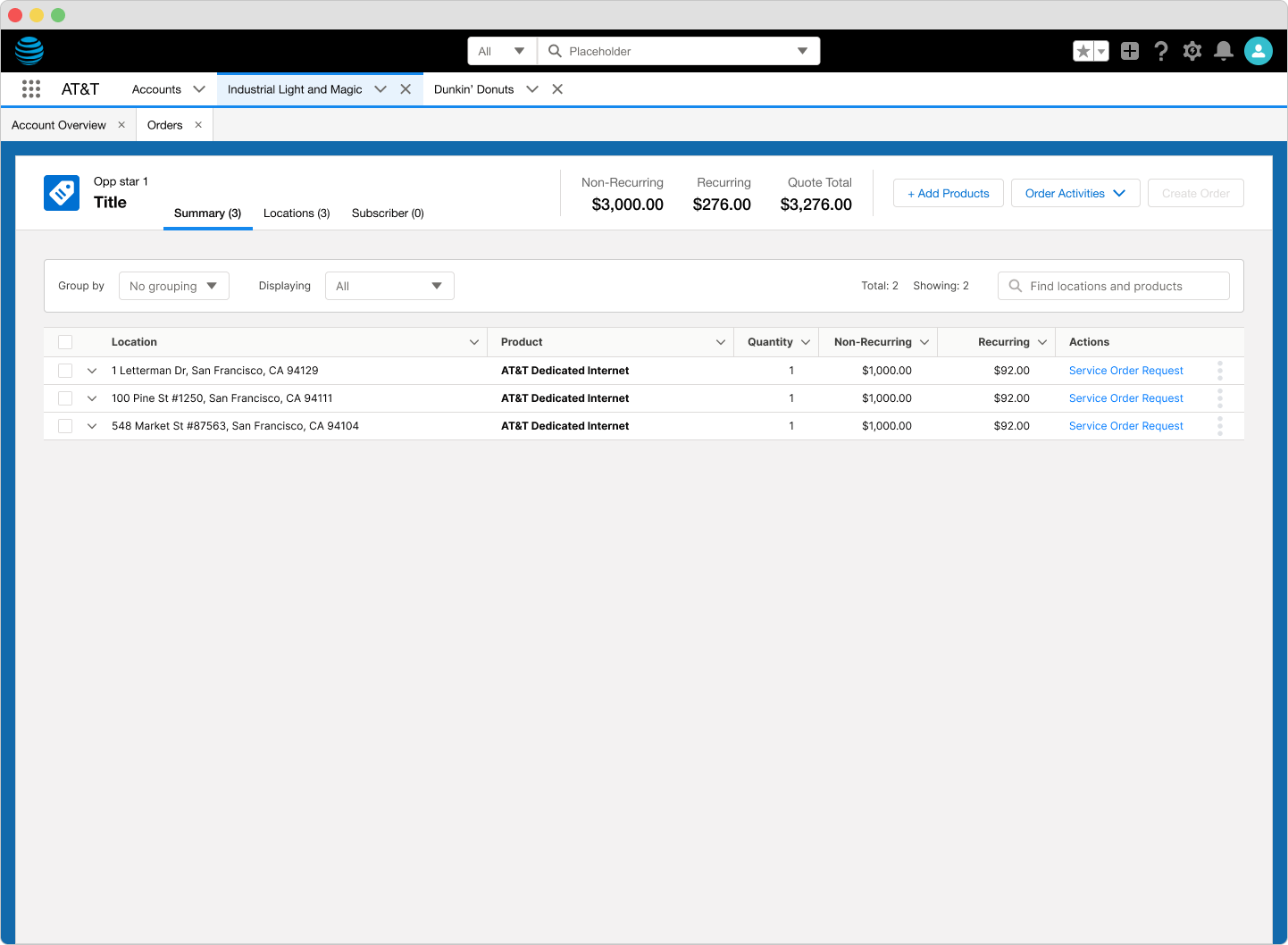
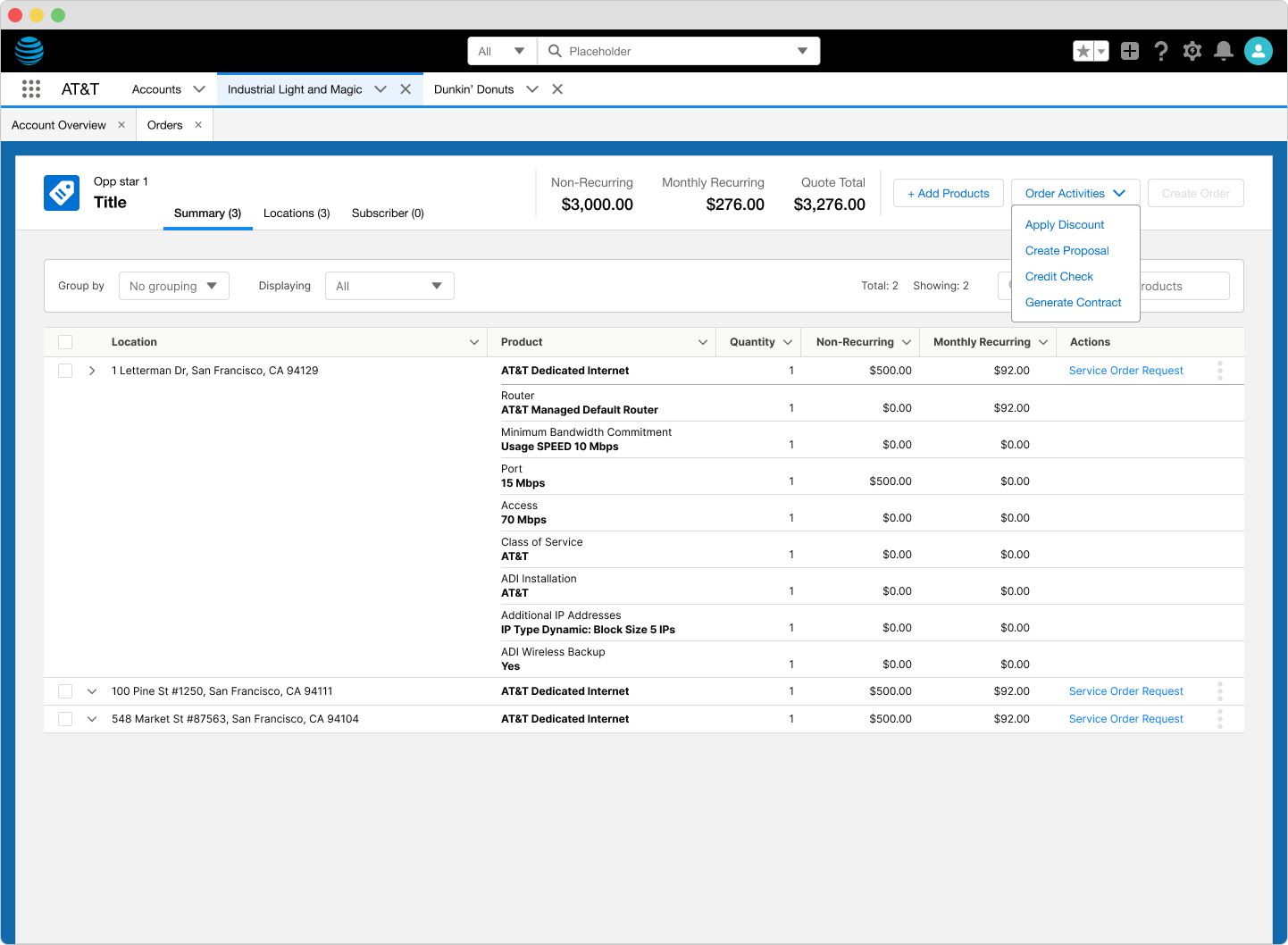
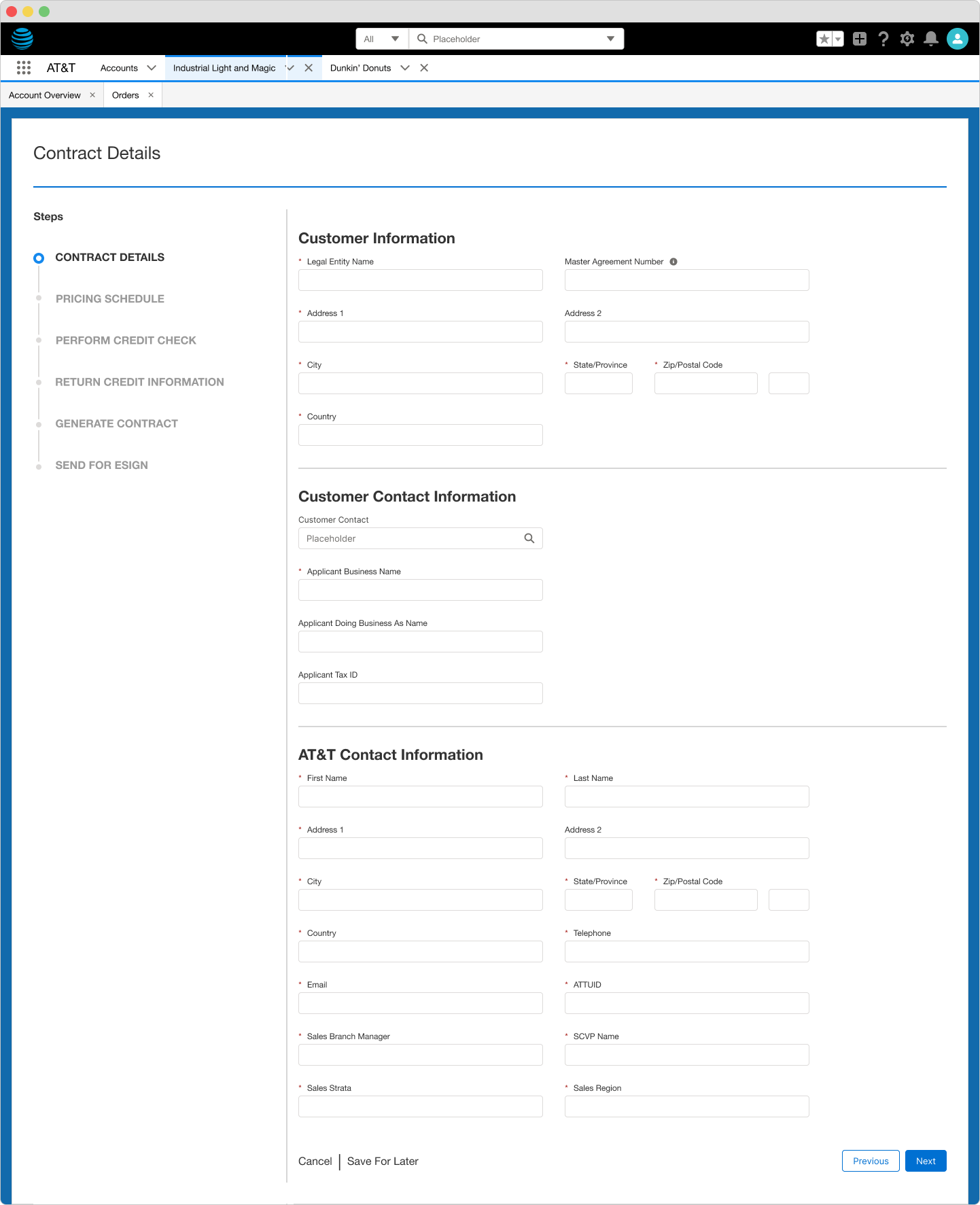
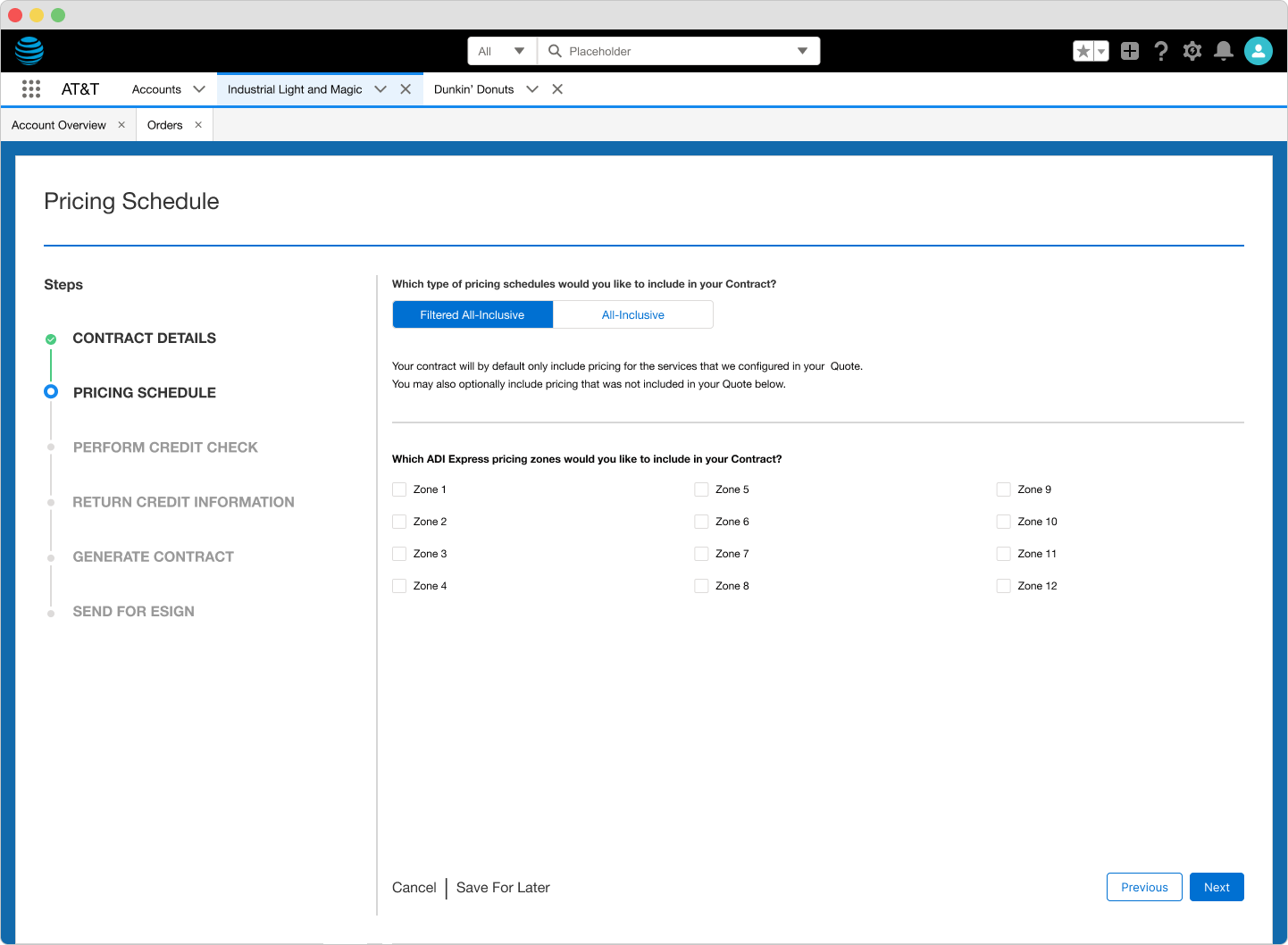
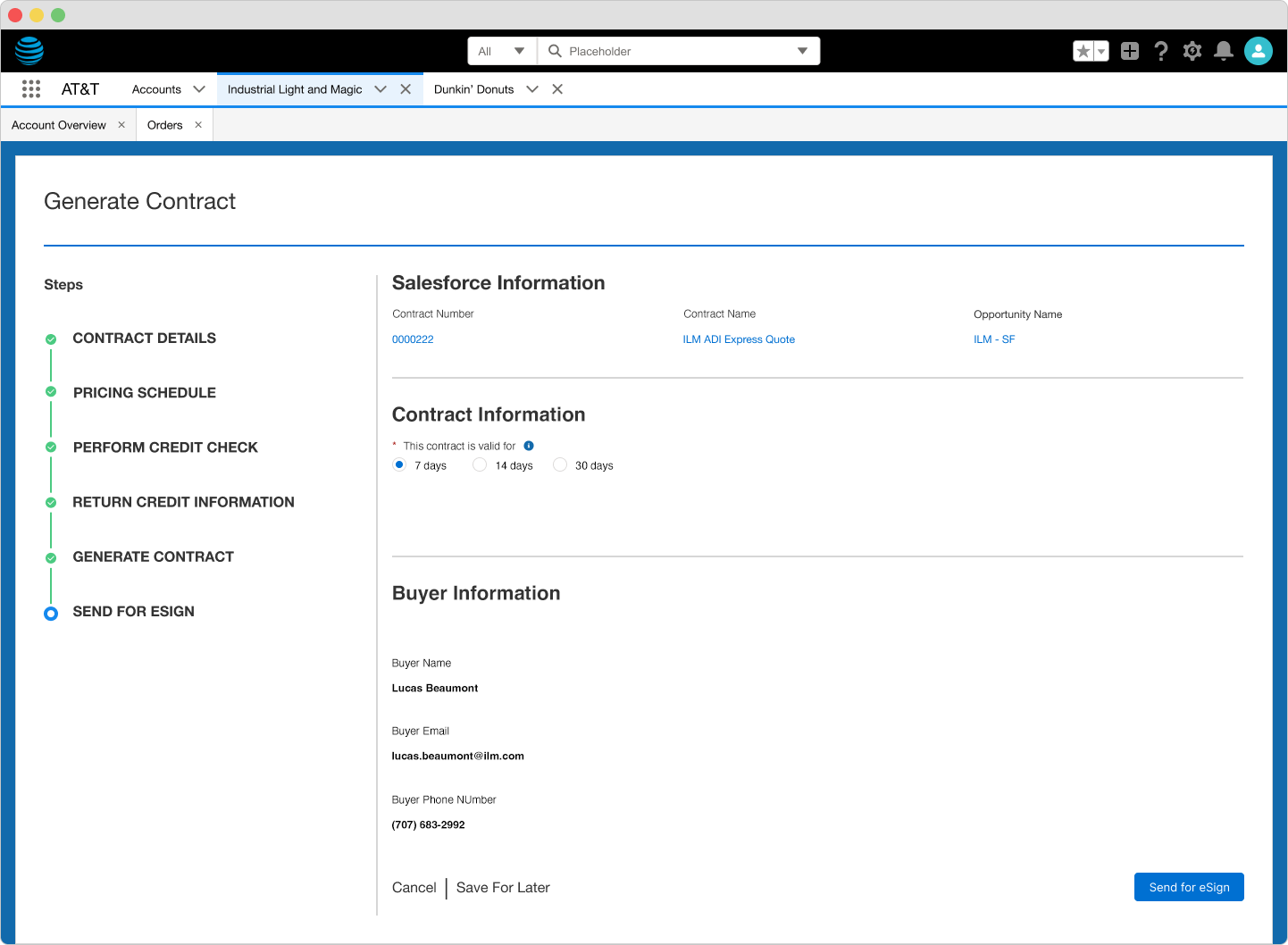
Generate Contract Flow
-
![]()
1. Opportunity Summary - Default
View the opportunity summary.
-
![]()
2. Opportunity Summary - Expanded
View an expanded view of the opportunity summary.
-
![]()
3. Contract Details
View the contract details.
-
![]()
4. Pricing Schedule
Set the pricing schedule.
-
![]()
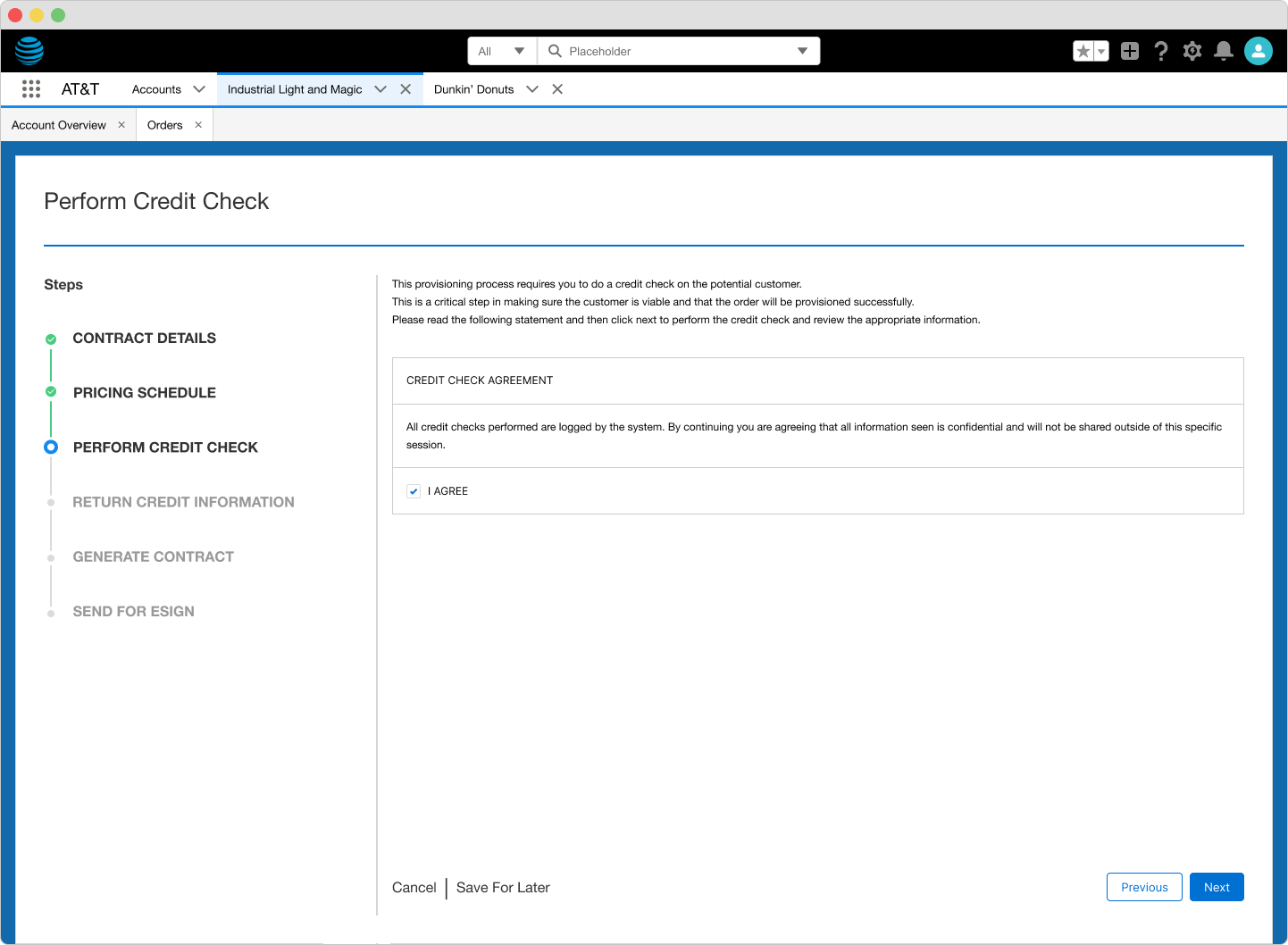
5. Perform Credit Check
Perform a credit check.
-
![]()
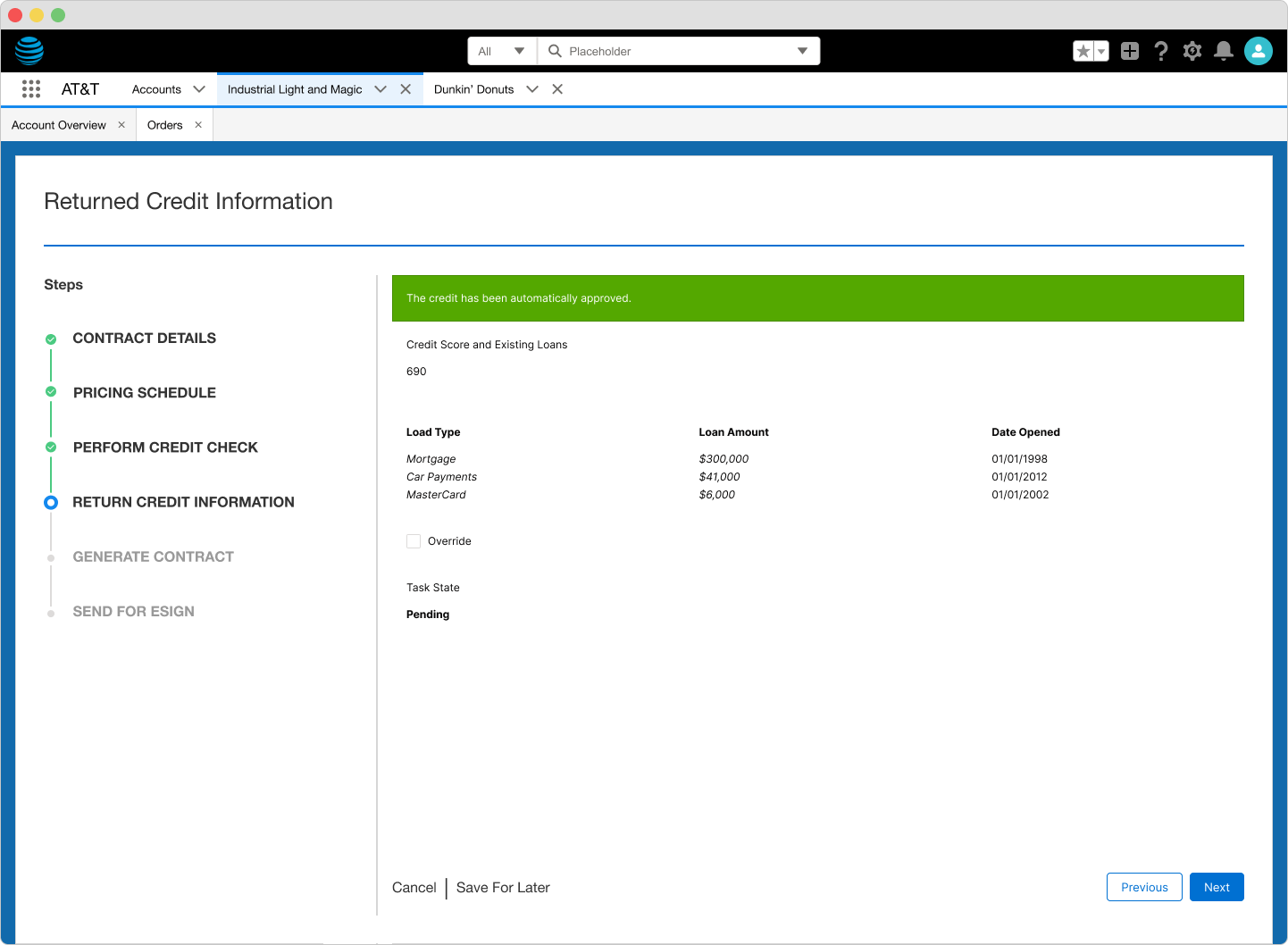
6. Credit Check Results
View credit check results.
-
![]()
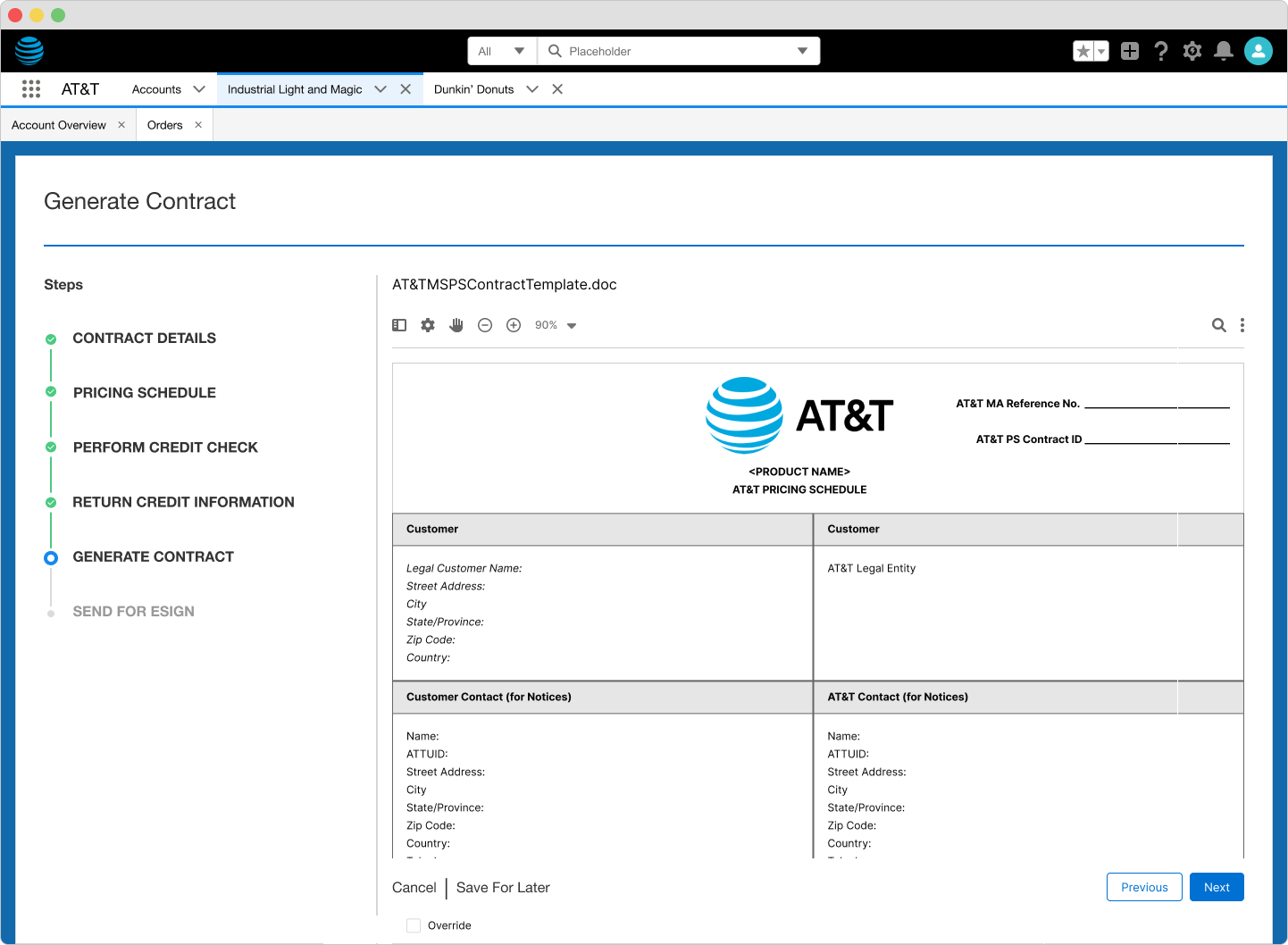
7. Contract Preview
Preview the generated contract.
-
![]()
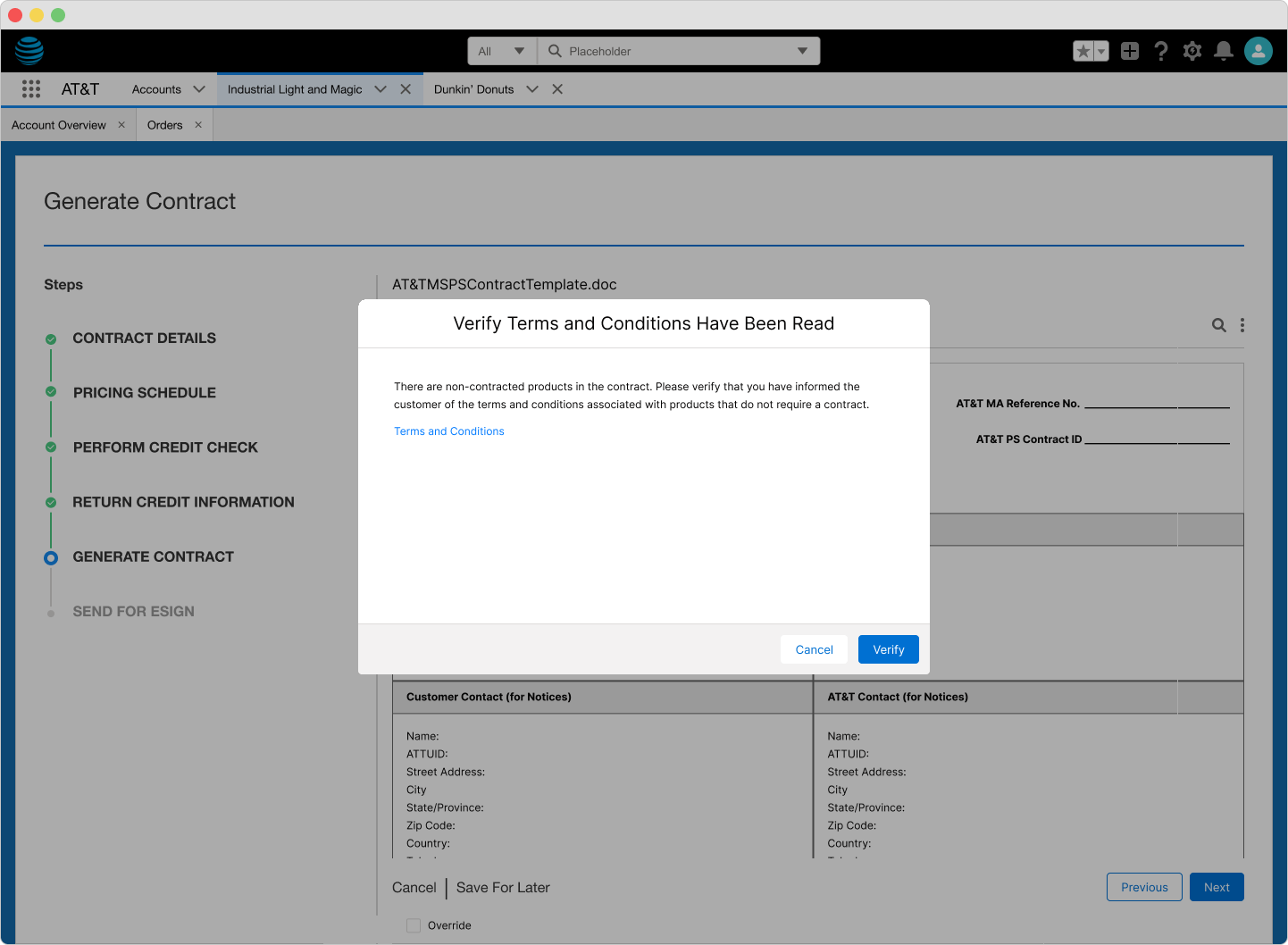
8. Confirm Terms
Confirm the terms and conditions have been read.
-
![]()
9. Send for eSignature
Send the contract to the customer for electronic signature.
Outcome
What shipped.
AT&T Business' sales flow now runs on 3 consolidated systems instead of 100+, with a rebuilt agent experience in Salesforce and a new self-service site for B2B customers. The project became Salesforce's largest transformation to date, coordinated across more than 250 people from both companies, and touches millions of AT&T Business customers.
Reflections
What I would do differently.
I leaned on research an outside agency had already done instead of running my own, and by the time gaps showed up in the findings, it was harder to course-correct. Next time I'd validate that research directly and get stakeholders in the room together earlier, rather than resolving requirements one conversation at a time.