
Case Study: Saving Dreamforce over $100K
by optimizing the event registration process.
CRM
B2B
Enterprise
Global Events
1→2
User Research
Information Architecture
ROLE
Lead UX Designer
COMPANY
Salesforce
TIMELINE
13 months
TEAM
Solo, ENG, QA, PO, Scrum
BY THE NUMBERS
23 to 8
fields cut, the same fix rejected in 2012
50%+
fewer registration-related support calls
$100k+
saved annually in call center costs
Visuals: Before and After
2012: 23 fields
Close up
2013: 8 fields
The Problem
The 2012 form was still costing money.
Dreamforce 2012 shipped with 23 mandatory fields on a single registration screen, and the session reset entirely after 15 minutes of inactivity, forcing users to start over. More than half of Dreamforce's customer service calls traced back to registration difficulties, a direct, measurable cost that leadership hadn't priced into the 2012 decision.
Role & Constraints
OWNED
Modernizing the registration and account-creation flow to the 2013 style guide, reworking flow, interactions, and performance for desktop and mobile.
PARTNERED ON
Developers, QA, a product owner, and a scrum master throughout the rebuild.
CONSTRAINTS
The same 23-field design flagged as a risk in 2012 was still live and generating call volume.
WHAT CHANGED SINCE 2012
Full-time employment status, and a year of measurable call center data tying friction directly to cost.
The Approach
4 steps, one vision.
1. DISCOVERY: Pulled a year of call center data tying registration friction to over half of all support calls.
2. DEFINITION: Set a target of 8 or fewer required fields, in line with established usability guidance.
3. DESIGN & ITERATION: Built task flows, wireframes, and clickable prototypes for desktop and mobile with QA and engineering.
4. DELIVERY: Shipped the reworked flow ahead of Dreamforce 2013, alongside the refreshed style guide.
Key Decisions
Same fix. Different pitch.
The fix
Cut required signup fields from 23 to 8
Why:Over half of support calls traced to registration friction, and this was the exact recommendation rejected in 2012.
Result: Registration-related support calls dropped by more than half, and call center costs fell by roughly $100,000 a year.
The pitch
Led with a year of cost data instead of the design alone
Why: The same recommendation, presented without numbers attached, had been overridden the year before.
Result: The proposal was approved and shipped, and the flow has stayed in production largely unchanged since.
Visuals
Dreamforce 2013 Registration Flow
-
![]()
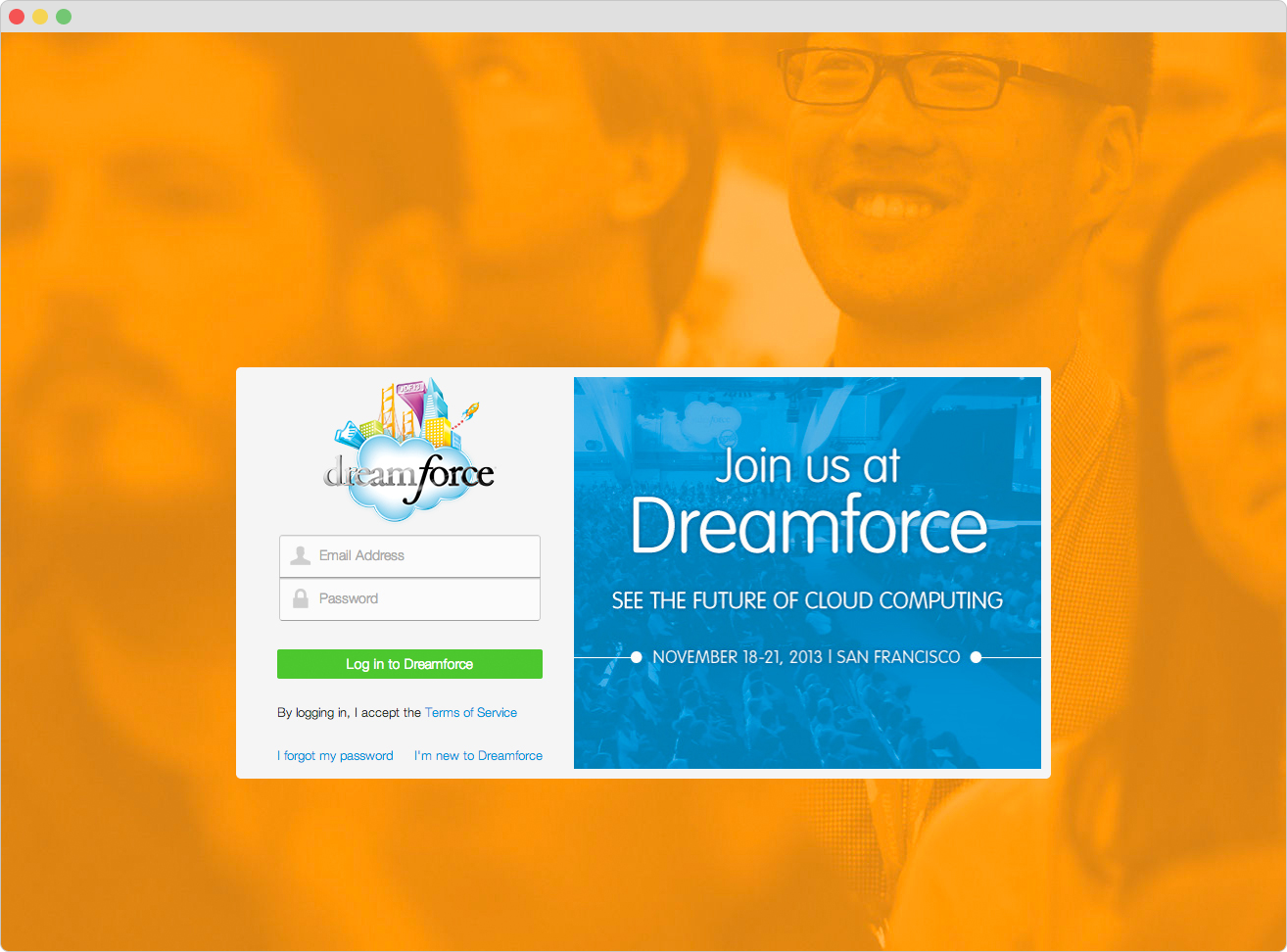
1. Dreamforce Registration Home
Login, retrieve password, or create an account to continue.
-
![]()
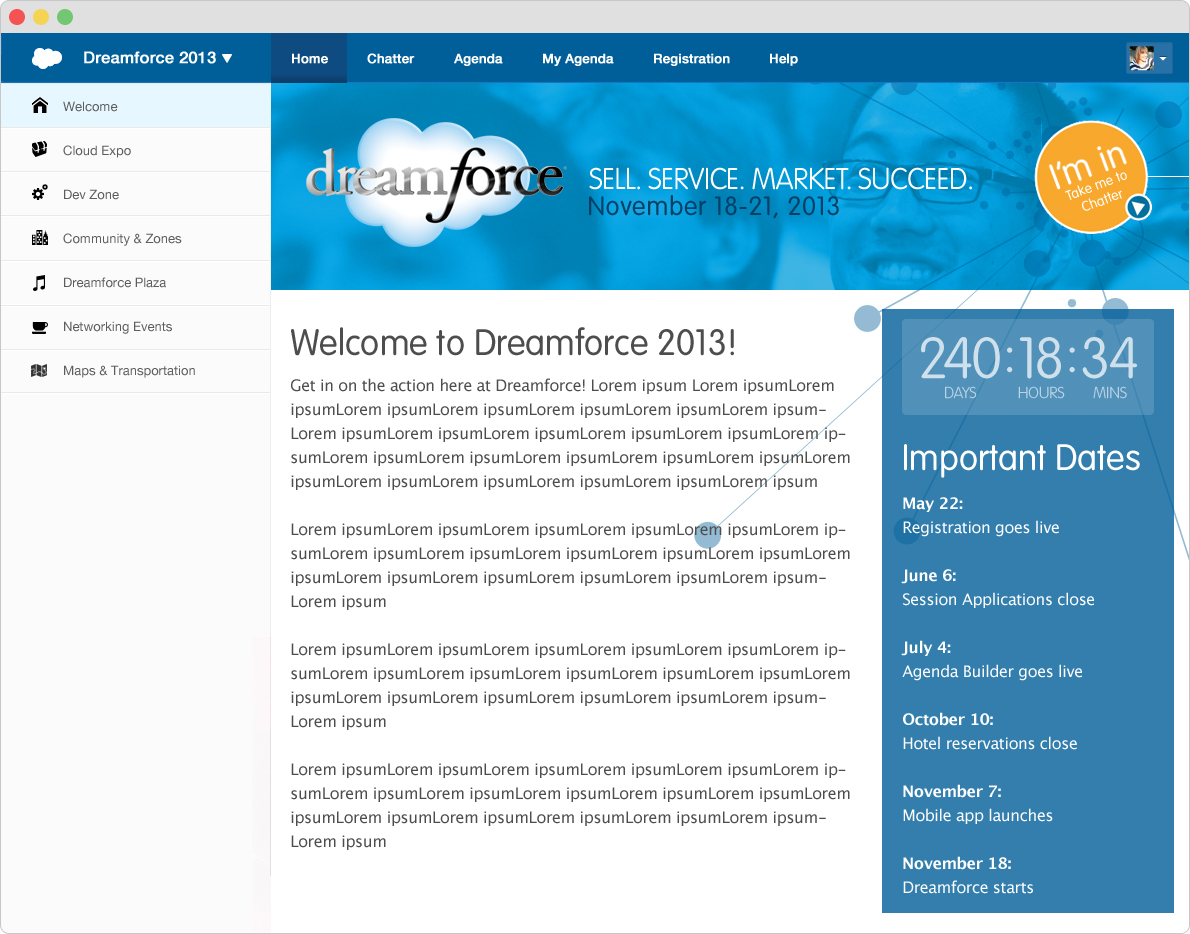
2. Welcome
Event description and important details.
-
![]()
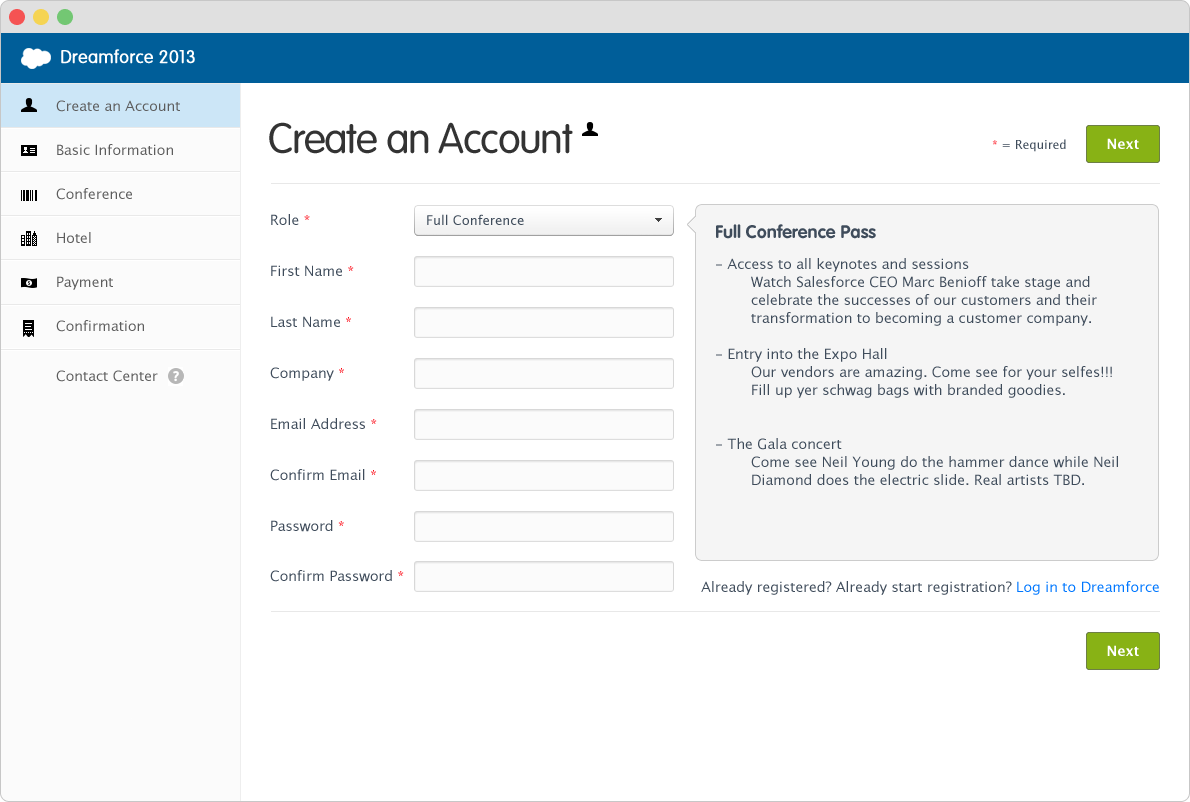
3. Create Account
Enter information to create an account.
-
![]()
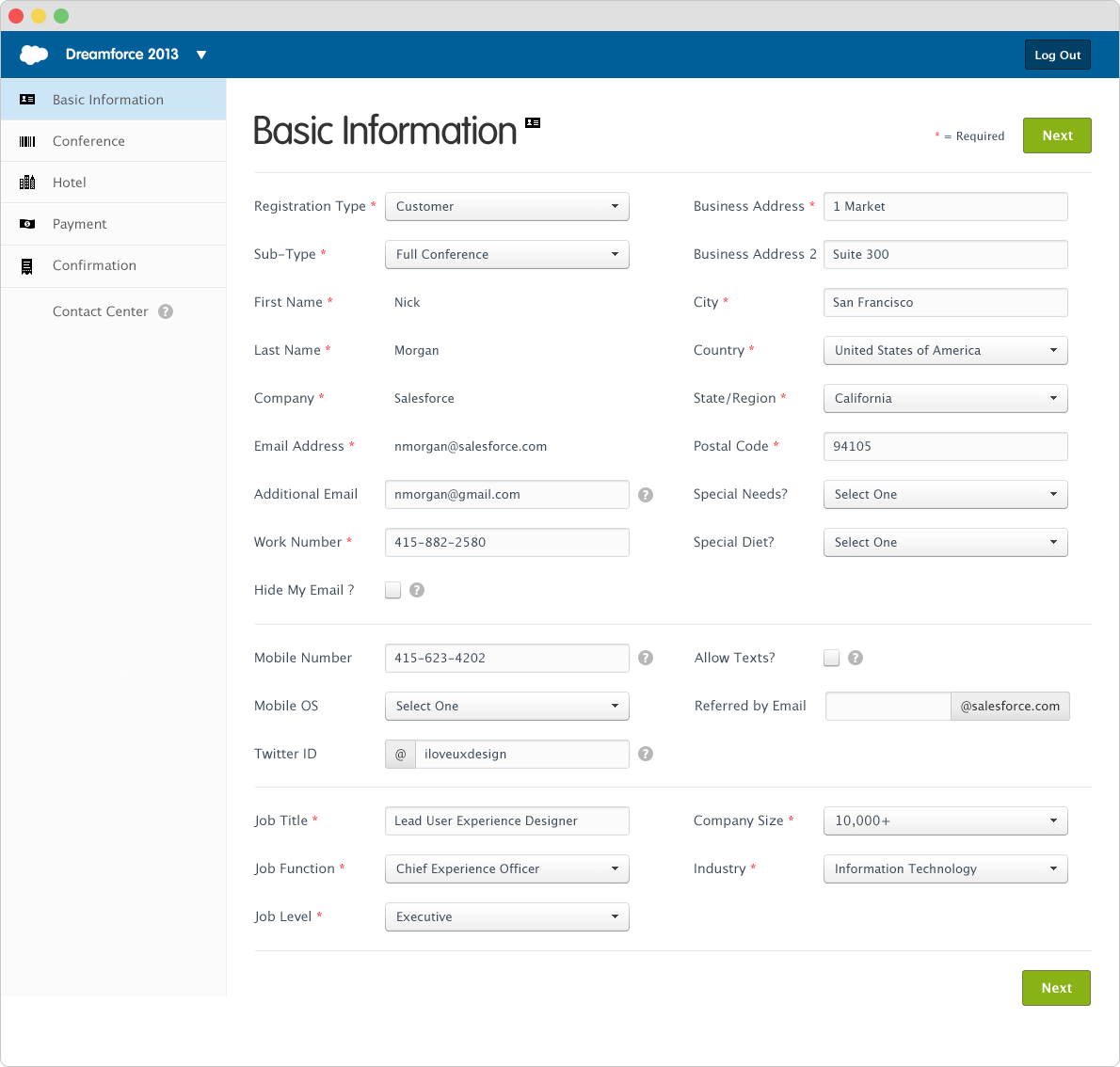
4. Basic Information
After the account is created, enter detailed information.
-
![]()
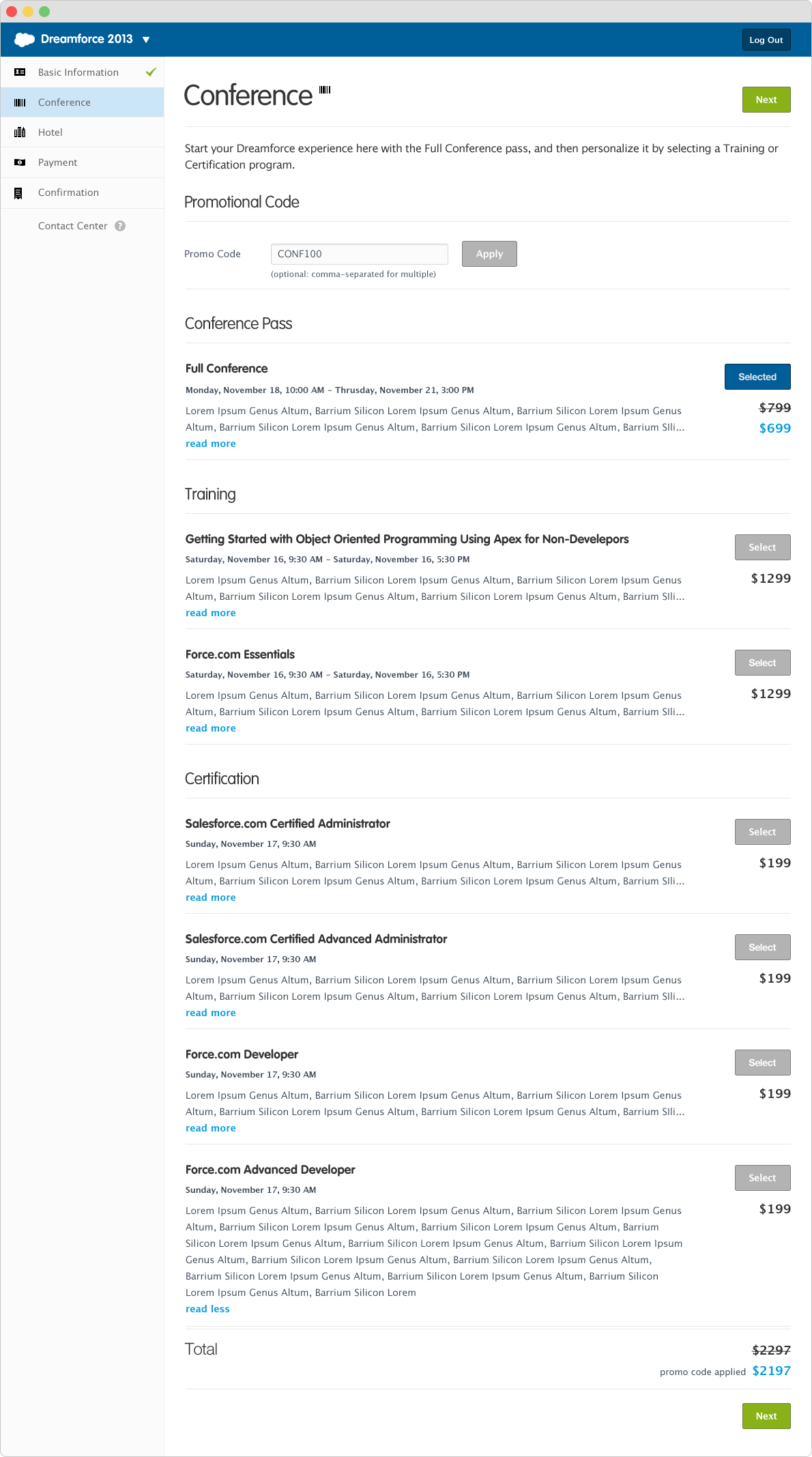
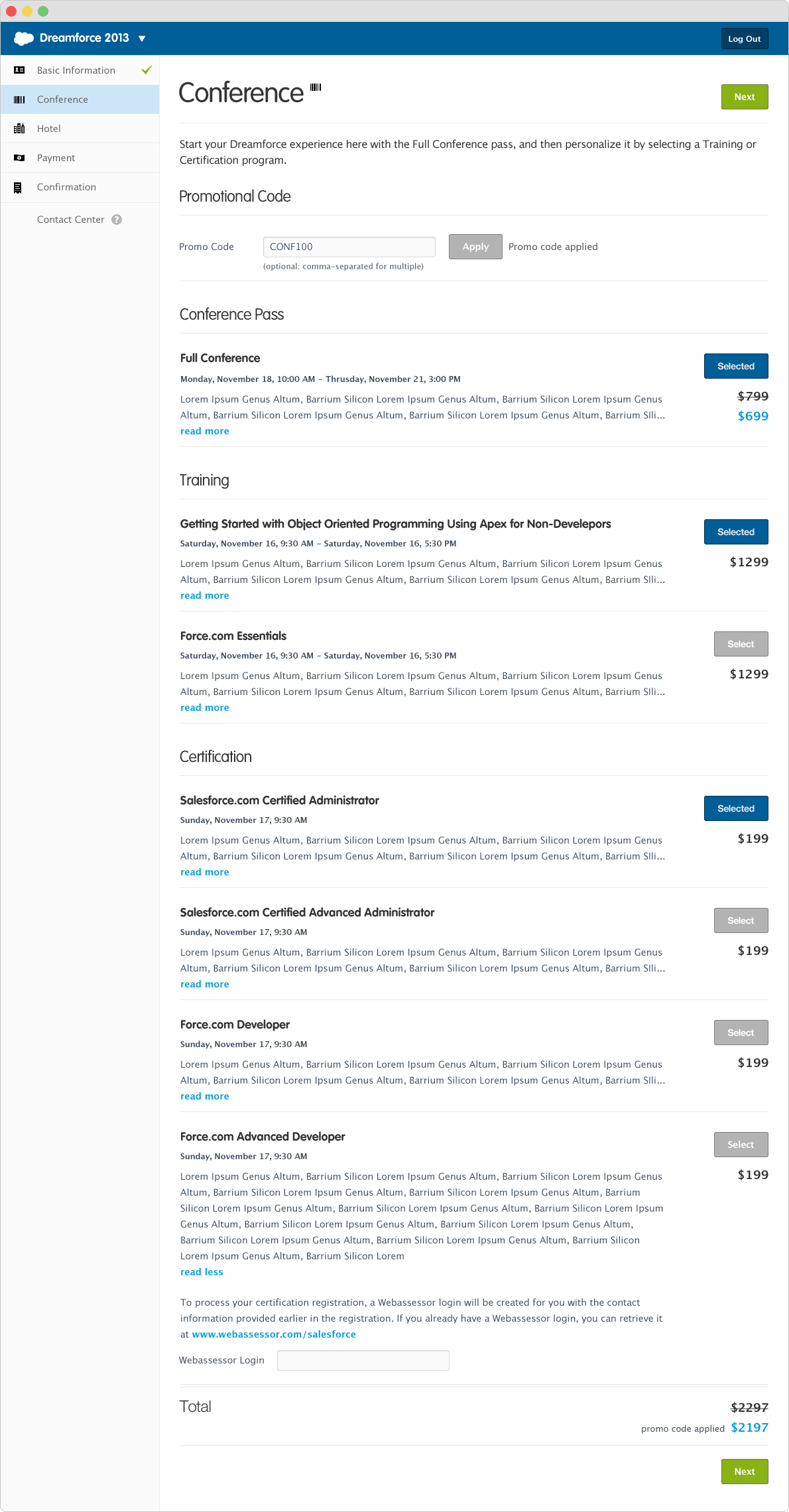
5. Additional Training and Certificates
Add any additional training or certification programs.
-
![]()
6. Additional Training Selected
One training program selected.
-
![]()
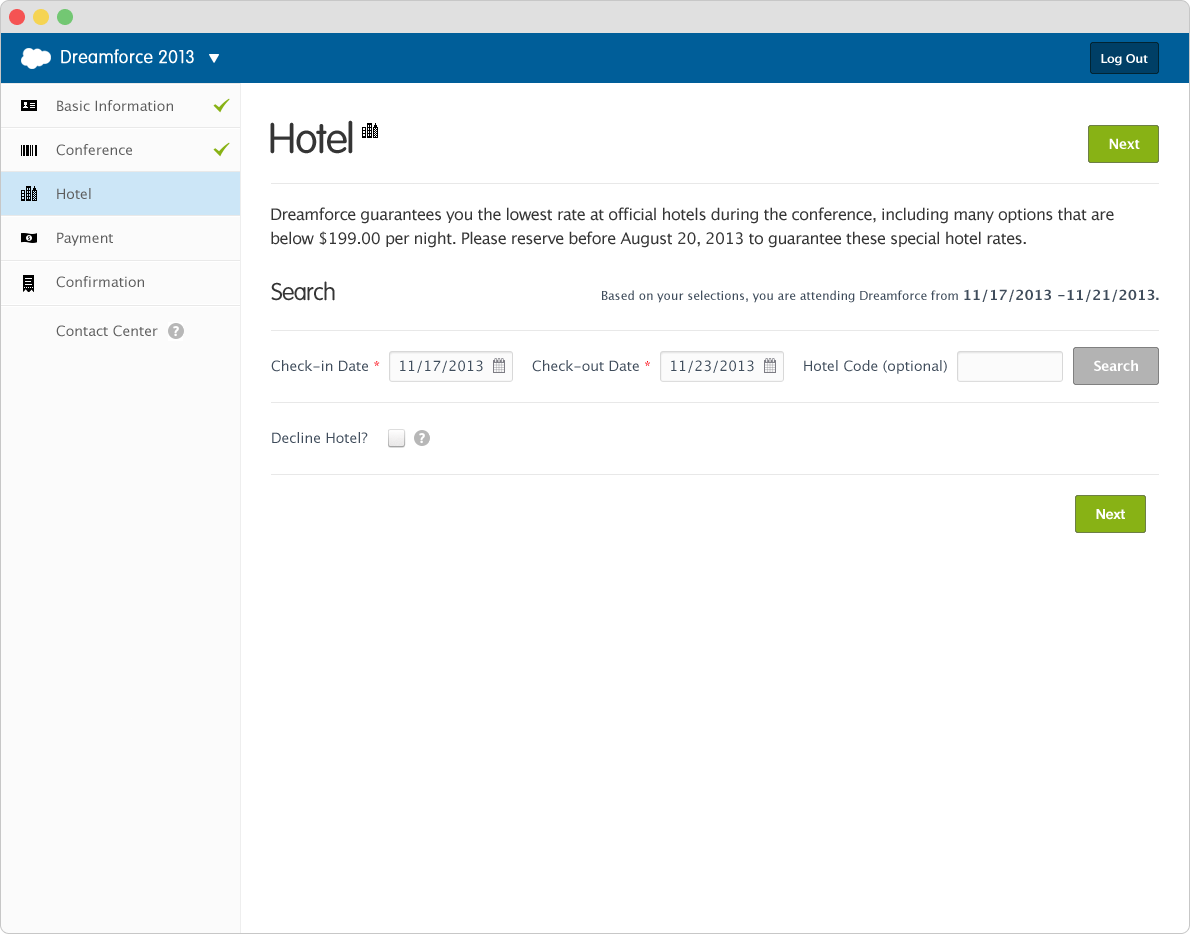
7. Hotel: Select Dates
Select your hotel dates.
-
![]()
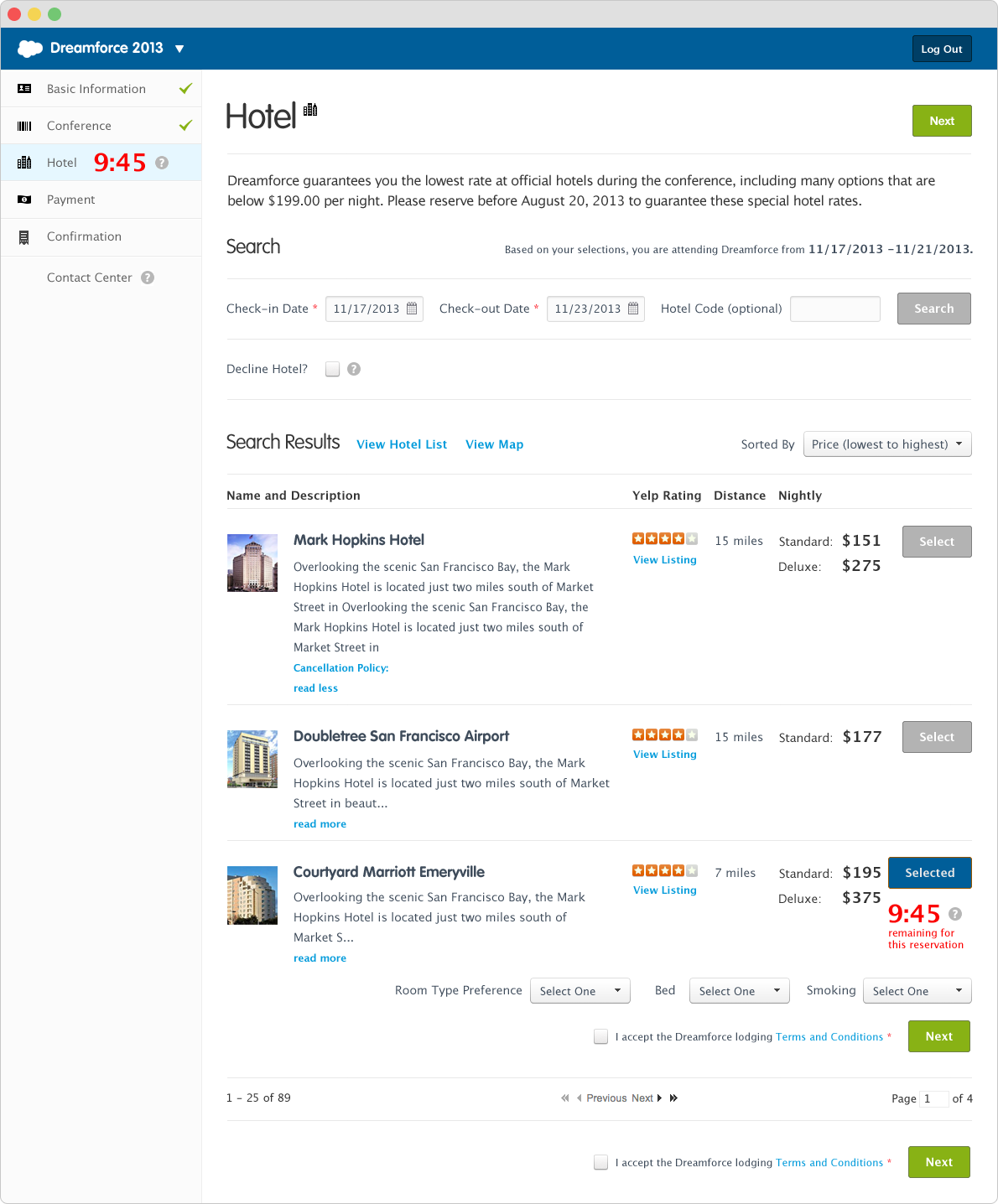
8. Hotel: Search Results
View hotel search results along with rating, distance from the event, and price options.
-
![]()
9. Hotel: Hotel Selected
Once selected, it's reserved for 10 minutes to complete the transaction.
-
![]()
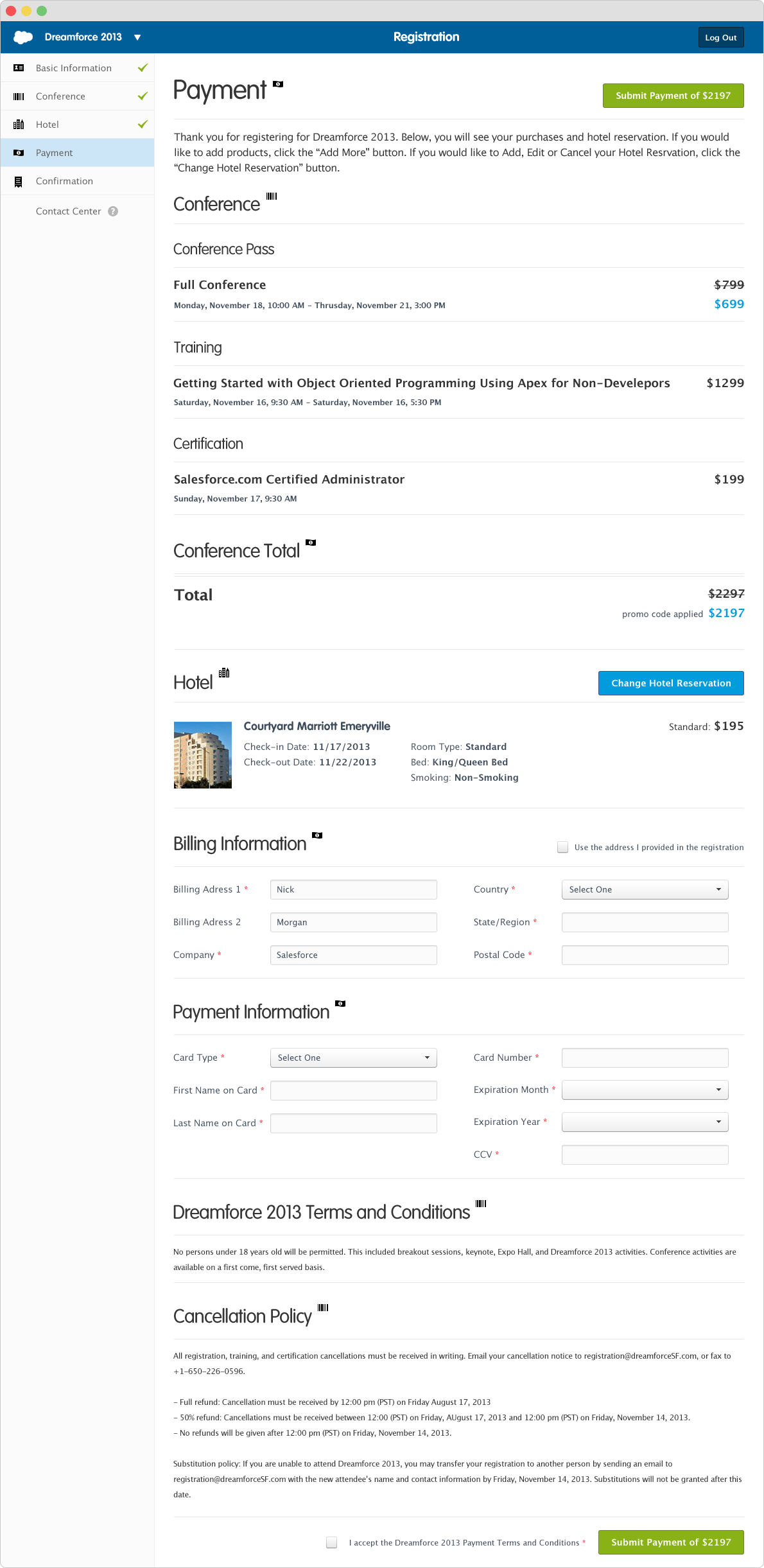
10. Checkout and Payment
Confirm the details and enter payment information.
-
![]()
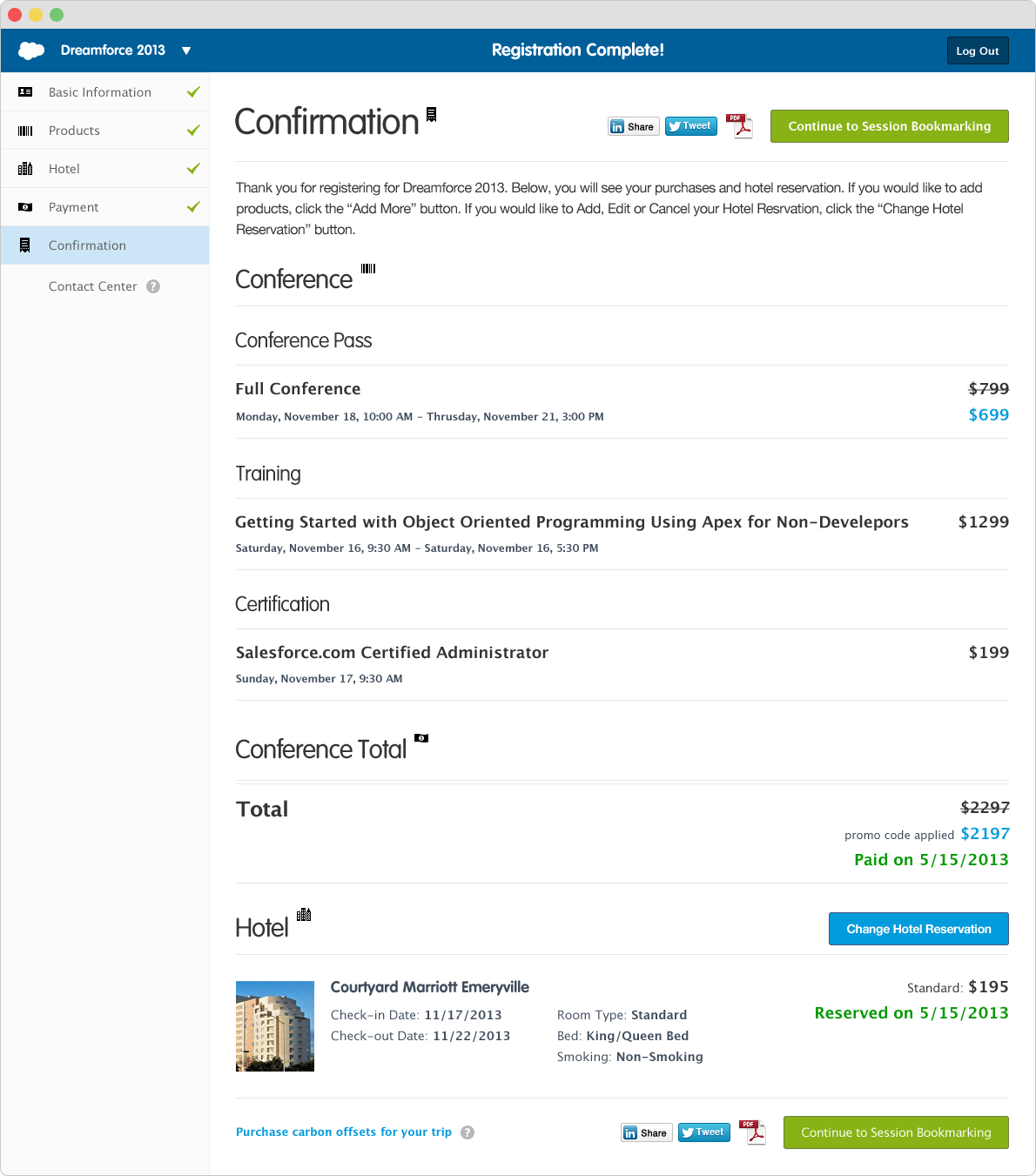
11. Payment Confirmation
Payment confirmation, along with the option to download a PDF for reimbursement.

Outcome
What shipped, and what held up.
Dreamforce 2013 drew 143,000 attendees, nearly double 2012's 77,000, on a registration flow that now asked for 8 fields instead of 23. Registration-related support calls fell by more than half, saving Salesforce roughly $100,000 in call center costs, and the core account-creation flow shipped in 2013 and is still running twelve years later, as of 2025.
Reflections
The fix here was the same one I'd proposed in 2012. What changed was how I pitched it: leading with a year of call center data and usability precedent instead of asking leadership to trust the design on its own.